On 6 June 1944, at 00.16, British gliders landed beside the Caen Canal and the River Orne, close to the village of Ranville (Commonwealth War Graves Commission). Both bridges were captured intact in the early hours, and Ranville became the first village to be liberated in France, according to the CWGC’s cemetery page. Many of the men who fell that night now lie in the village war cemetery and around its church.
The cemetery is permanently open and free to enter. From Anisy, it is a 22-minute drive, with Pegasus Bridge 19 minutes away. This guide covers who is buried there, how to find your way around, and how to pair it with the other 6th Airborne sites.
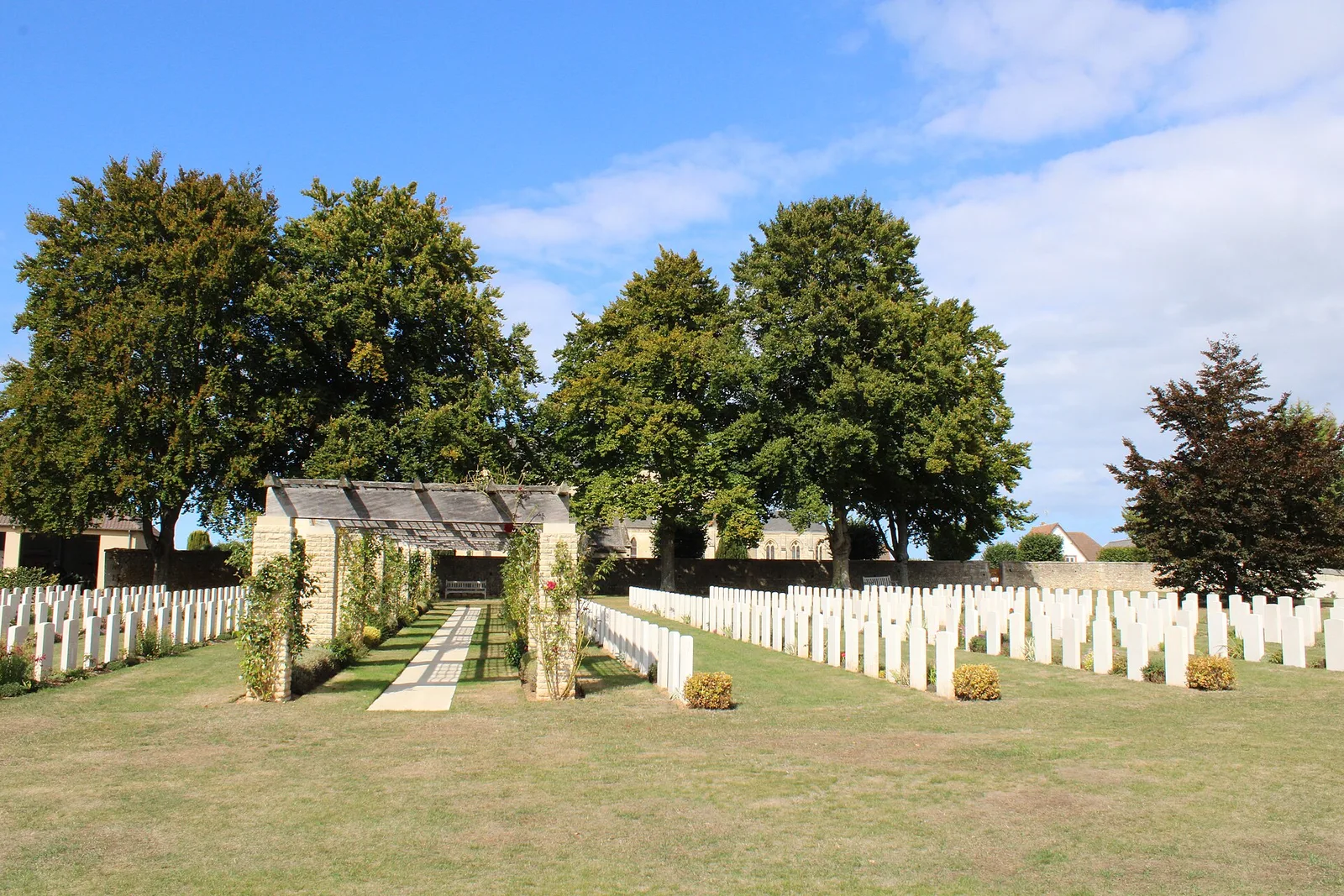
Who is buried at Ranville War Cemetery?
The Commonwealth War Graves Commission cares for the graves of Commonwealth servicemen and publishes the cemetery’s register. Its figures are the ones to trust on the day.
Key facts:
- The numbers: 2,236 Commonwealth burials of the Second World War, 90 of them unidentified, according to the CWGC.
- Other nations: 323 German graves and a few burials of other nationalities. The CWGC school resource lists Belgium, Australia, New Zealand, Poland and the United States among them.
- Canadians: 76 graves, including 57 men of the 1st Canadian Parachute Battalion, according to Veterans Affairs Canada.
- The units: more than 300 men of the Parachute Regiment, and glider pilots who died on 6 June 1944.
- The youngest: a 16-year-old buried in Plot IVA, according to the same resource.
- The churchyard: next door, Ranville Churchyard holds 47 more Commonwealth burials, one unidentified, and one German grave.
Figures differ slightly between sources, depending on what each one counts. The Airborne Assault Museum’s ParaData site, for instance, lists 2,151 British and 76 Canadian burials.
Ranville War Cemetery and the 6th Airborne sites around it
Everything sits within a small radius of the village. The bridges, the museum, the cemetery and the church are a few minutes apart, with the Merville Battery a little further east.
The war cemetery
The cemetery was designed by the architect Philip Hepworth. As you arrive, take a moment to see how the entrance arch frames the Cross of Sacrifice at its centre (CWGC). You will find the earliest burials at the front. Men buried later generally lie towards the rear, near the shelter with its high colonnade.
A long pergola covered with flowers runs across the middle of the cemetery. The inner paths are grass, on flat and firm ground. The register box sits inside the entrance arch, between two stone benches.
In 1947, a party of relatives came on pilgrimage. Local people had lined their path with candles. The mayor told them their men were sleeping among friends, like angels of deliverance, the CWGC recalls.
Ranville Churchyard
The churchyard adjoins the war cemetery. Along its back wall lie glider pilots and paratroopers who died on 6 and 7 June 1944, beside the ancestors of local families.
Lieutenant Den Brotheridge is buried here (ParaData). His glider landed less than 50 feet from the canal bridge. He was hit by machine-gun fire while leading his men across and died moments later. The CWGC believes he was the first Allied serviceman to die on French soil during the Normandy Campaign. He lies near four of Kieffer’s French commandos, notes Caen la mer Tourisme.
Pegasus Bridge and Horsa Bridge
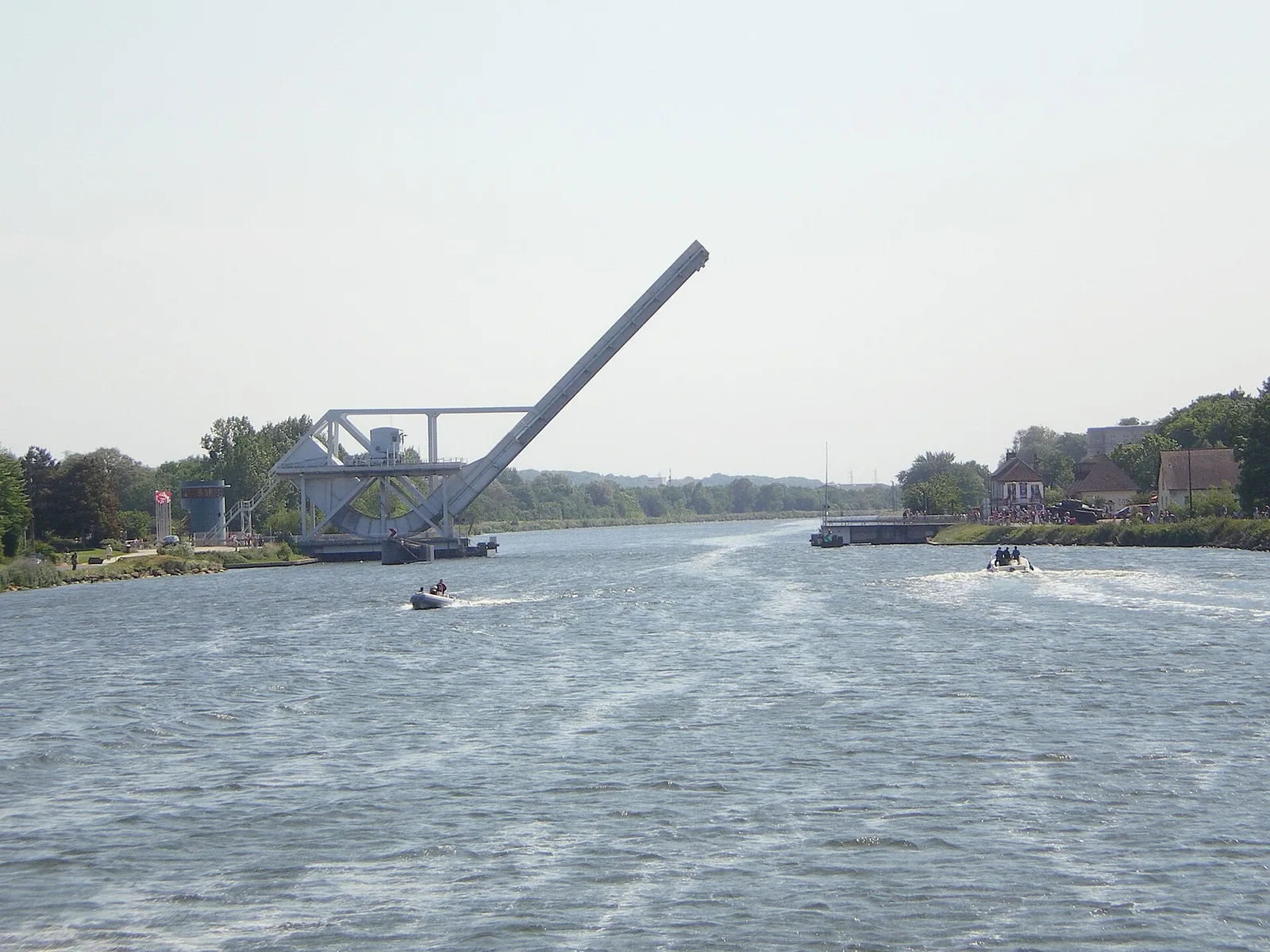
The 180 men of the Ox and Bucks under Major John Howard secured the bridges within ten minutes (Pegasus Memorial). The canal bridge was named Pegasus Bridge on 26 June 1944. The Orne bridge at Ranville is known as Horsa Bridge. The full day around the bridge is covered in the guide to Pegasus Bridge, Merville and Sword Beach.
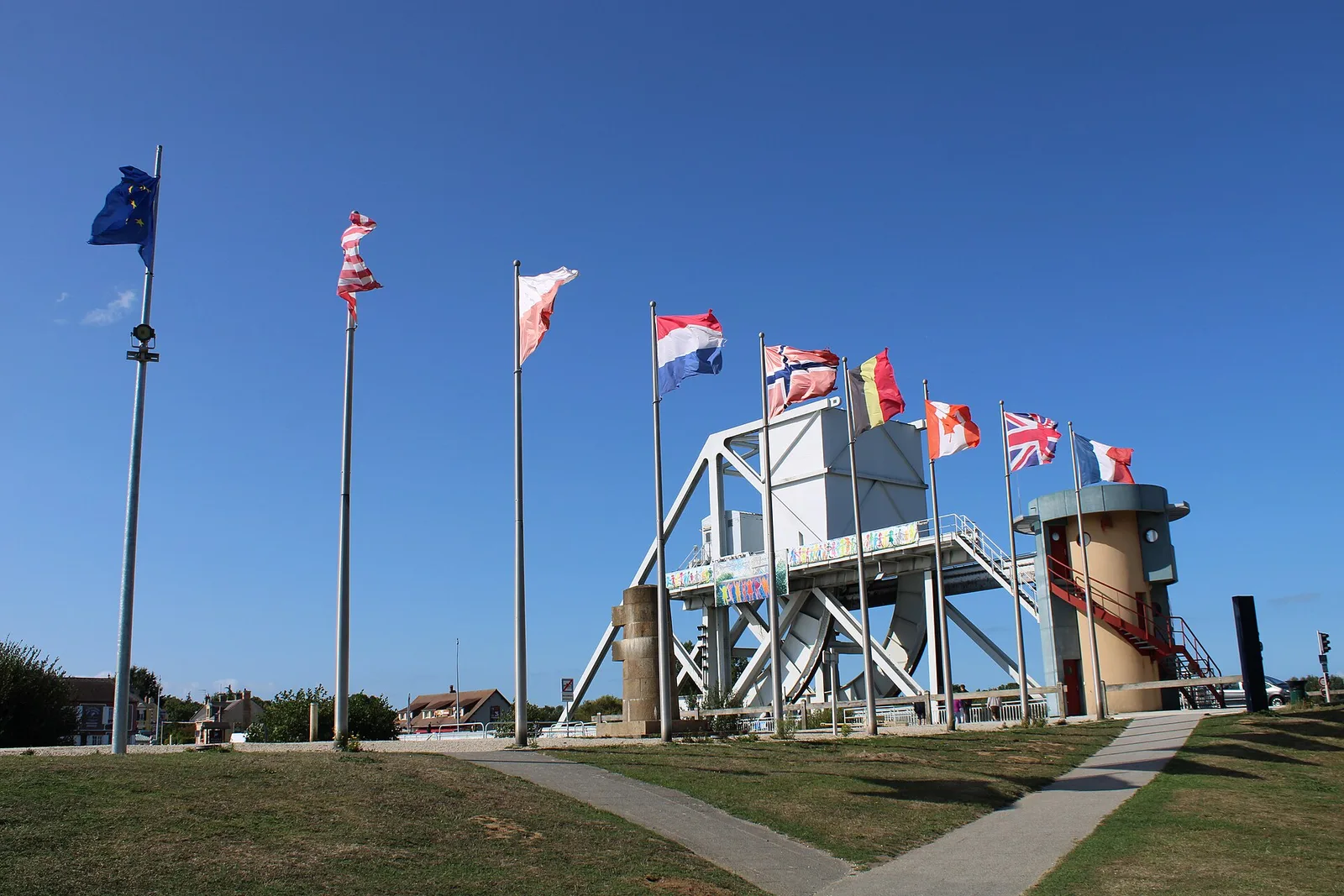
Facing the bridge, Café Gondrée is recorded as the first house liberated in France, in the last hour of 5 June 1944 (French Ministry of Culture, Mérimée database).
The Pegasus Memorial
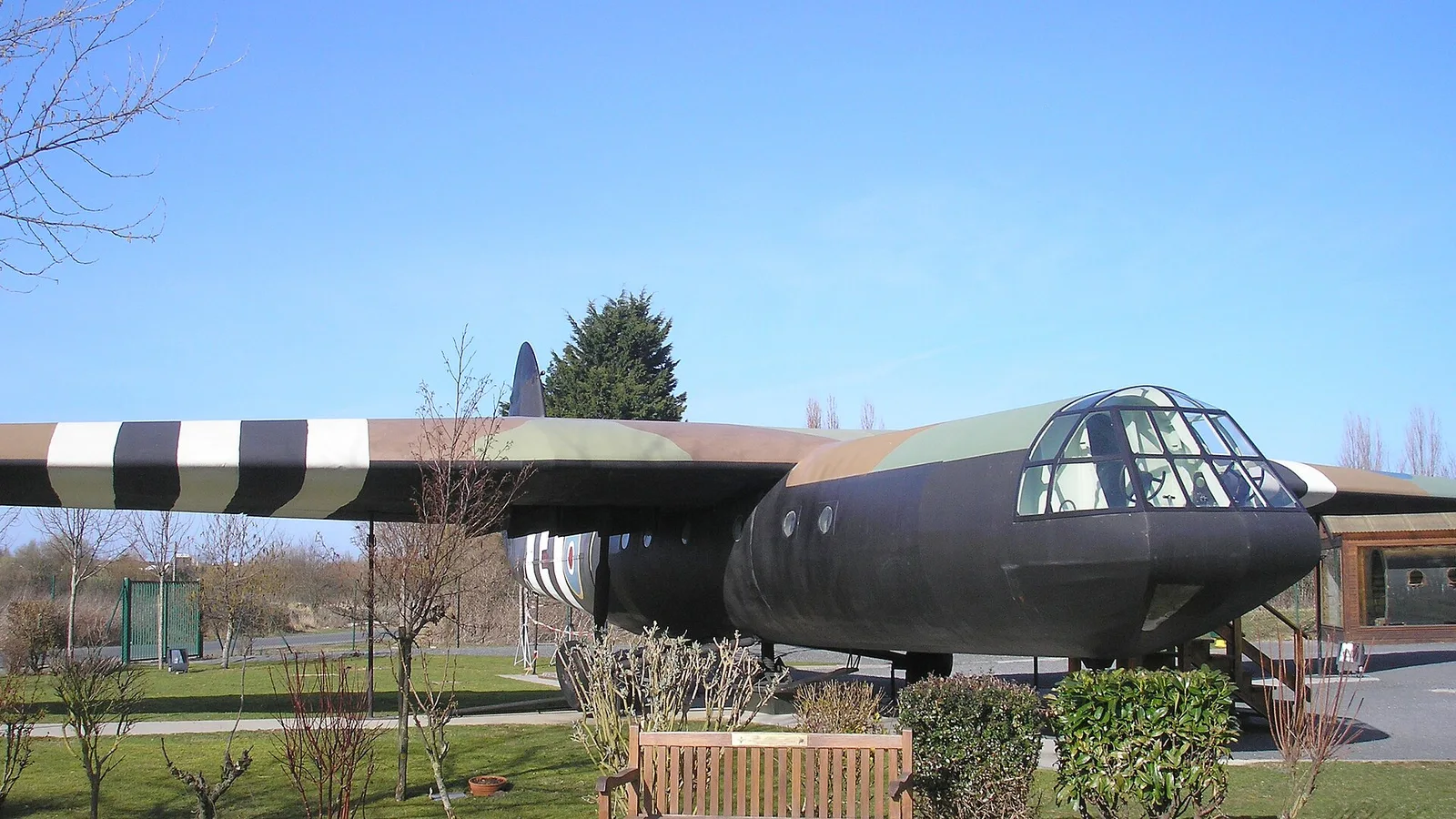
The 6th Airborne Division museum stands on Avenue du Major Howard in Ranville. It keeps the original bridge, replaced in 1994 and now displayed in its grounds, along with a full-size replica of a Horsa glider (Normandy Tourism).
The Merville Battery
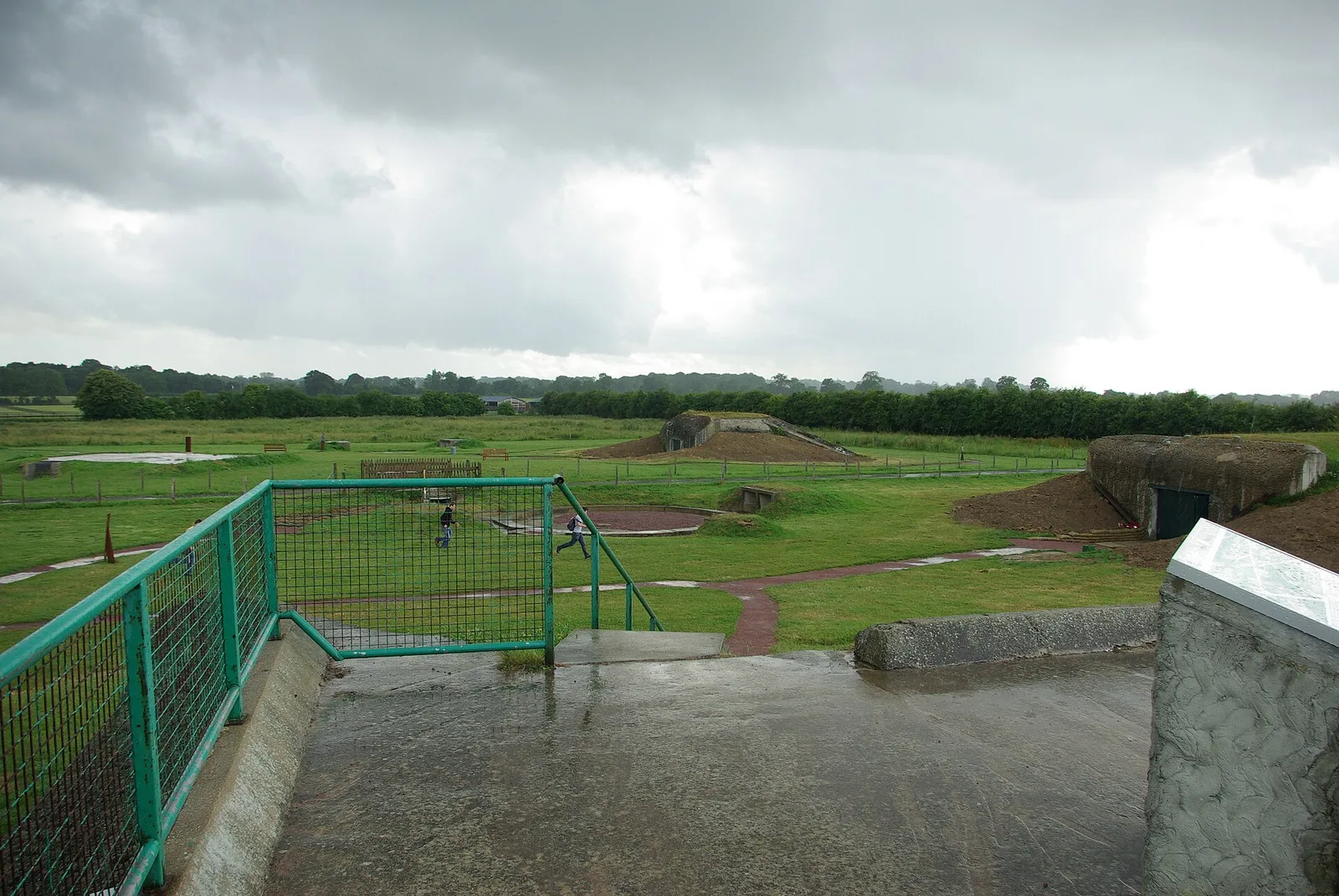
East of the Orne, the British 9th Parachute Battalion silenced the battery at dawn on 6 June. Its 700 men had jumped in the night of 5 to 6 June 1944 (Merville Battery). Bunker No. 2 is now their memorial.
What to know before you visit
The cemetery is permanently open, according to the CWGC. The route is signposted from the village. You can park in a lay-by in front of the entrance, or in the large car park across the road, behind a stone windmill, about 60 metres away. Two accessible parking bays sit at the far end of the cemetery, with more parking by the church, 75 metres north.
The nearby museums keep their own calendar. The Pegasus Memorial is closed from 1 September to 15 December, then from January to May 2027, with no reopening date fixed yet (Pegasus Memorial, opening times). The local tourist office expects it back in spring 2027, after renovation and expansion (Normandie Cabourg Pays d’Auge Tourism).
Good to know. In winter, the cemetery, the churchyard and the bridges remain open. The Merville Battery is open until 15 November, then again from 15 March, according to its official site. Check each museum’s dates before you set off.
A one-day itinerary from Anisy
From Anisy, every 6th Airborne site is within a half-hour drive.
| Stop | What you see | Distance from Anisy | By car |
|---|---|---|---|
| Pegasus Bridge, Bénouville | The canal bridge, Café Gondrée | 13 km (8 miles) | 19 min |
| Horsa Bridge, Ranville | The Orne bridge | 13 km (8 miles) | 20 min |
| Pegasus Memorial, Ranville | Original bridge, Horsa replica (closed for works) | 13 km (8 miles) | 21 min |
| Ranville War Cemetery | 2,236 Commonwealth burials, the churchyard next door | 15 km (9 miles) | 22 min |
| Merville Battery | Casemates, 9th Battalion memorial | 21 km (13 miles) | 30 min |
Driving times calculated on 9 November 2026 with the open-source OSRM route planner, without traffic, from the centre of Anisy. Coordinates taken from the CWGC cemetery page and OpenStreetMap.
Morning: the two bridges
Start at Pegasus Bridge, then cross the Orne by Horsa Bridge. This follows the order of the night of 6 June, when the gliders came down beside both crossings.
Late morning: the cemetery and the church
Drive to the war cemetery on Rue du Comte Louis de Rohan Chabot. Walk the whole cemetery first, row by row, then go round to the church for Lieutenant Brotheridge’s grave.
Afternoon: Merville or the beach
If the battery is open when you visit, carry on to Merville-Franceville for about an hour and a half. Otherwise, head to Ouistreham and Sword Beach, where Lord Lovat’s commandos landed before joining the paratroopers at the bridges (Normandy Tourism). The ferry terminal sits at the end of the beach, and the guide to arriving on the Ouistreham ferry helps fit this visit around your sailing.
Practical guide to Ranville and its sites
The cemeteries and bridges are free to visit. Museum hours and prices change every season, so each link leads to the official page.
Ranville War Cemetery
- What you see: 2,236 Commonwealth burials, the Cross of Sacrifice, the Stone of Remembrance and the pergola.
- From Anisy: 22 minutes.
- Admission: free, and the cemetery is permanently open.
- Good to know: the CWGC’s free For Evermore app offers tours of the site, on location or remotely.
Ranville Churchyard
- What you see: 47 Commonwealth graves around the church, including Lieutenant Brotheridge’s.
- From Anisy: 22 minutes, then a short walk from the war cemetery.
- Admission: free.
- Good to know: an opening in the north wall links the war cemetery with the village cemetery next door.
Pegasus Bridge and Café Gondrée
- What you see: the 1994 bridge over the canal, and the café at 12 Avenue du Commandant-Kieffer.
- From Anisy: 19 minutes.
- Admission: the bridge is free to cross.
- Good to know: the café has been a listed historic monument since 1987.
The Pegasus Memorial
- What you see: the original bridge, a Horsa glider replica, the story of the 6th Airborne Division.
- From Anisy: 21 minutes.
- Admission: paid museum, opening times and prices on the official site.
- Good to know: closed for works until spring 2027; allow 75 minutes once it reopens.
The Merville Battery
- What you see: the casemates, the assault re-enactment every 20 minutes, the 9th Battalion memorial.
- From Anisy: 30 minutes.
- Admission: paid museum, opening times and prices on the official site.
- Good to know: free parking, dogs welcome, and most of the site is wheelchair accessible.
Why stay north of Caen to visit Ranville?
From Anisy, north of Caen, Ranville is 22 minutes away and Pegasus Bridge 19. For travellers from the UK, Brittany Ferries runs a Portsmouth to Caen crossing, a six-hour sailing with an overnight option. Canadian visitors can follow the same road west the next day to the Canadian sector at Juno Beach.
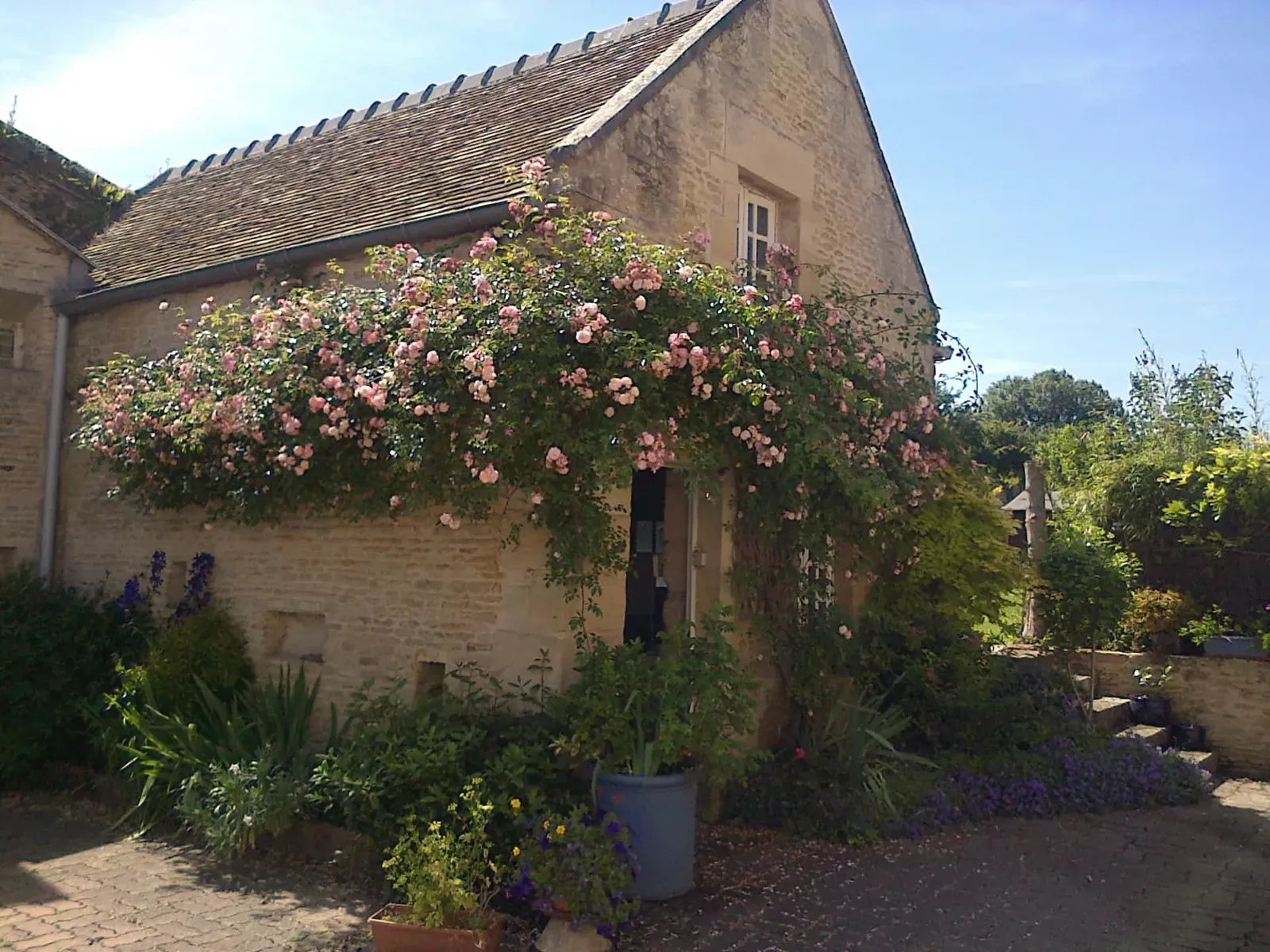
La maison bleue is a small stone cottage in Anisy for four guests, in a quiet village of seven hundred people. There are no shops or restaurants in the village, so the best local addresses are waiting on the fridge. Two guests put it this way after their stay:
"Perfect location to explore the beaches and different locations from D-Day." Martin, July 2026
"The location is perfect for heading out to any place in the Normandy region." James, July 2022
Free dates and the price of each night are shown in the cottage calendar. Your request goes straight to Patricia, who replies in French, English or Italian.
Tips for visiting Ranville War Cemetery
Come early in the morning or late in the day, when the village is quiet. The ground is flat, but the grass can be wet, so wear sturdy shoes. To find a name, search the CWGC’s online records first, then note the plot, row and grave.
Visitors walk quietly between the rows of white headstones. Take time to read the inscriptions and the badges carved on the stones. The CWGC resource invites visitors to look for the youngest and the oldest, and to count the countries they came from.
If you are travelling with children, print that resource before you leave. It sets a small search through the plots, ideal for a family visit.
Key takeaway. Ranville War Cemetery and the churchyard are permanently open, free, and 22 minutes from Anisy. Pair them with Pegasus Bridge in the same morning, and check museum dates: the Pegasus Memorial reopens in spring 2027.
Frequently asked questions
How many soldiers are buried at Ranville?
The CWGC records 2,236 Commonwealth burials in the war cemetery, 90 of them unidentified. There are also 323 German graves and a few other nationalities. The churchyard next door holds 47 more Commonwealth burials.
Is a ticket or a booking needed?
Entry is free and the cemetery is permanently open, according to the CWGC. Individual visitors do not need to book. Only the nearby museums, such as the Pegasus Memorial and the Merville Battery, charge admission.
Are there Canadian soldiers at Ranville?
Yes, 76 Canadians are buried there, according to Veterans Affairs Canada. Most served with the 1st Canadian Parachute Battalion, part of the British 6th Airborne Division. Some 450 of its paratroopers landed early on 6 June.
How can you find a particular grave?
The CWGC’s online search gives the cemetery, plot, row and grave for each name. A paper register is also kept inside the entrance arch. Note these references before you go in, so you can head straight to the right row.
Is the cemetery wheelchair accessible?
The CWGC describes grass paths on flat, firm ground. The main entrance has a single stone step. A second entrance, about 70 metres south, is reached along a level grass path, and two accessible parking bays sit at the far end.