The D-Day landing beaches of Normandy have been a UNESCO World Heritage site since 26 July 2026. The World Heritage Committee made the decision at its 48th session, held in Busan, South Korea (Normandy Tourism).
For your visit, nothing changes at the water’s edge: the beaches remain open and free. The difference you are most likely to notice is crowds, especially around 6 June and in summer. Below are the six inscribed sites, what UNESCO is asking France to do, and a two-day route from just north of Caen.
What exactly did UNESCO decide?
The decision is numbered 48 COM 8B.26. UNESCO inscribed a "serial" property: six separate sites in the Calvados and Manche departments form a single World Heritage property, officially named Beaches of the D-Day Landings, Normandy, 1944 (decision 48 COM 8B.26, UNESCO).
UNESCO used criterion (vi) of the World Heritage Convention, which covers places directly associated with events of outstanding universal significance. Here, the event is D-Day, 6 June 1944. That morning, American, British, Canadian and French troops landed from the sea and the air, with Belgian, Dutch, Norwegian and Polish forces fighting alongside them.
Key points:
- Date: 26 July 2026, 48th session of the World Heritage Committee, Busan.
- Six sites: Utah Beach, Omaha Beach, Pointe du Hoc, Gold Beach, Juno Beach and Sword Beach.
- Criterion: (vi), direct association with an event of universal significance.
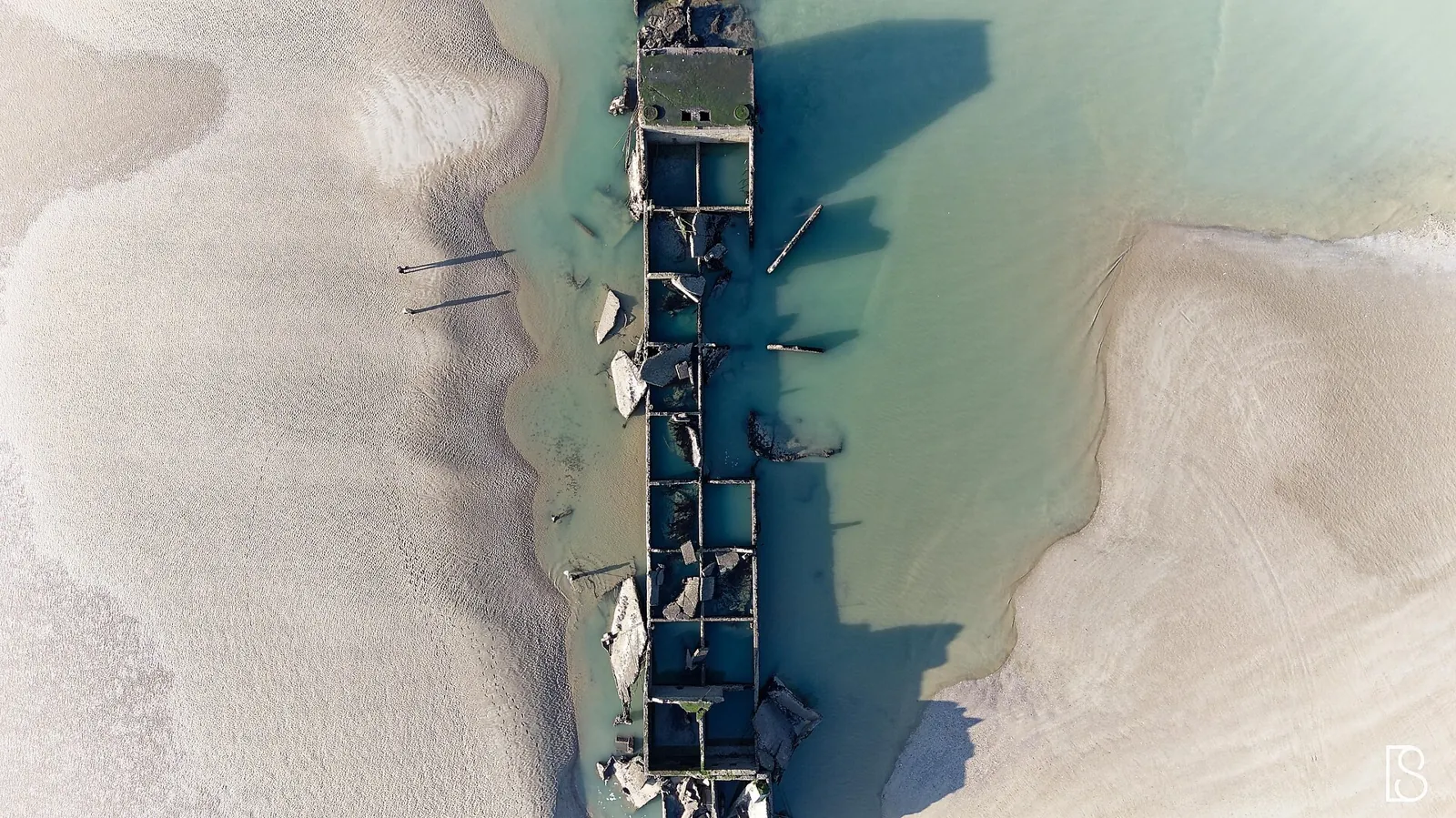
- Remains named by UNESCO: the Mulberry B artificial harbour at Arromanches, and the Normandy American Cemetery, built right next to Omaha Beach.
- Access: the beaches remain free and open.
- Visitors: 5.9 million people visited the remembrance sites in 2025, according to Normandy Tourism.
Which six sites are inscribed?
Juno Beach: the Canadian sector
Juno Beach covers Courseulles-sur-Mer, Bernières-sur-Mer and Saint-Aubin-sur-Mer. The Juno Beach Centre in Courseulles tells the Canadian story of D-Day. The Queen’s Own Rifles of Canada landed at Bernières, with orders to take and hold Anisy, the village of La maison bleue, about ten kilometres inland. A plaque unveiled in the village in 1994 marks it (Queen’s Own Rifles memorial, Anisy).
Gold Beach and Sword Beach: the British sector
Gold Beach stretches around Arromanches-les-Bains, where the concrete caissons of the Mulberry B harbour still stand offshore. Sword Beach, the easternmost beach, runs from Lion-sur-Mer to Ouistreham, where the Portsmouth ferry docks. Pegasus Bridge, at Bénouville, is a few kilometres inland.
Omaha Beach, Pointe du Hoc and Utah Beach: the American sector
Omaha Beach was the costliest beach of D-Day, and the Normandy American Cemetery at Colleville-sur-Mer overlooks it. Pointe du Hoc is the cliff the US Rangers climbed on the morning of 6 June; its bomb craters are still there. Utah Beach, in the Manche department, is the westernmost site, with its D-Day museum at Sainte-Marie-du-Mont.
What changes for your visit?
What stays the same
The beaches remain open and free. French law states that pedestrian access to beaches is free, unless safety, defence or environmental reasons require otherwise (Environment Code, article L321-9). There is no entry fee for the beaches, and the listing doesn’t add one. Museums and managed sites set their own opening hours and prices: check their official websites before you go.
Good to know. World Heritage status does not hand the sites over to UNESCO. France remains responsible for protecting them and must inform UNESCO of any major project that could affect them.
What UNESCO is asking France to do
The decision sets out recommendations (decision 48 COM 8B.26):
- Manage growing visitor numbers, so that crowds do not damage the sites.
- Build one shared interpretation of the six sites, instead of six separate stories.
- Monitor fragile remains, threatened by coastal erosion.
- Dismantle the offshore wind farm under construction in the buffer zone at the end of its concession in 2057, and restore the site to its original condition.
For visitors, the most likely effect is busier sites, especially around 6 June and in summer.
How to visit all six sites from north of Caen
The six sites run from Ouistreham to the east coast of the Cotentin peninsula. Driving times below start from Anisy, just north of Caen.
| Site | What you see | Distance from Anisy | By car |
|---|---|---|---|
| Juno Beach | Juno Beach Centre, the Canadian landing villages | 11 km | 12 min |
| Sword Beach | Beach from Lion-sur-Mer to Ouistreham, Pegasus Bridge nearby | 11 km | 14 min |
| Gold Beach | Arromanches, remains of the Mulberry harbour | 25 km | 30 min |
| Omaha Beach | Beach, Normandy American Cemetery | 53 km | 46 min |
| Pointe du Hoc | Cliff, bomb craters | 60 km | 54 min |
| Utah Beach | Beach, museum at Sainte-Marie-du-Mont | 85 km | 70 min |
Driving times calculated on 4 October 2026 with the open-source OSRM route planner, without traffic. Same method for Caen: the Caen Memorial is 11 minutes away, the castle 12.
Day 1: Sword, Juno and Gold
The three eastern beaches are all within 30 minutes of Anisy. Start at Pegasus Bridge and Sword Beach, spend the early afternoon at the Juno Beach Centre, and finish at Arromanches to see the Mulberry caissons.
To add a day in Bayeux, whose tapestry museum is closed until October 2027, the journal’s guide to the Bayeux Tapestry in 2027 explains what the town still shows while the embroidery is away.
Day 2: Utah, Pointe du Hoc and Omaha
The western sites take more driving. Head to Utah Beach first, since it is the furthest. Then work your way back east through Pointe du Hoc and Omaha Beach, and end the day at the American Cemetery, 46 minutes from the house.
Arriving by ferry
The Portsmouth ferry docks at Ouistreham, on Sword Beach. Anisy is a short drive inland from the port, which makes it an easy first or last night in Normandy.
Practical guide to the six sites
The beaches are free to walk. Museum opening hours and prices change with the seasons, so each link goes to the official, up-to-date page.
Juno Beach and the Juno Beach Centre
- What you see: the Canadian landing beach, the villages of Courseulles, Bernières and Saint-Aubin, and the Juno Beach Centre, which tells the Canadian story of D-Day.
- From Anisy: 12 minutes.
- Admission: the beach is free; the Juno Beach Centre charges admission, see official hours and prices.
- Good to know: the Centre also runs guided tours of Juno Park, in front of the building.
Sword Beach and Pegasus Bridge
- What you see: the beach from Lion-sur-Mer to Ouistreham and, inland, Pegasus Bridge and the Pegasus Memorial museum, dedicated to the British soldiers who took and held the bridge.
- From Anisy: 14 minutes to the beach, with Pegasus Bridge on the way.
- Admission: the beach is free; the Pegasus Memorial charges admission, see official hours and prices.
- Good to know: the Portsmouth ferry docks at Ouistreham, at the end of Sword Beach.
Gold Beach and Arromanches
- What you see: the Mulberry B harbour caissons, visible from the beach, and the D-Day Museum, which describes itself as the first museum built to commemorate 6 June 1944.
- From Anisy: 30 minutes.
- Admission: the beach and the harbour view are free; the museum charges admission, see official hours and prices.
- Good to know: the heights above the town, home to the Arromanches 360 circular cinema, give you an overview of the harbour.
Omaha Beach and the American Cemetery
- What you see: the beach, and the Normandy American Cemetery at Colleville-sur-Mer above it.
- From Anisy: 46 minutes.
- Admission: free, parking included. The cemetery is open daily from 9 am to 5 pm, except 25 December and 1 January, and admission ends 30 minutes before closing (ABMC).
- Good to know: the flag is lowered in a short ceremony one hour before closing.
Pointe du Hoc
- What you see: the cliff the US Rangers climbed, its bomb craters and bunkers.
- From Anisy: 54 minutes.
- Admission: free, open daily from 9 am to 5 pm.
- Good to know: the site has been under restoration since 17 February 2026, for about 18 months. Some paths and bunkers are closed, access is via the west path, and the visitor center is closed (ABMC restoration project).
Utah Beach
- What you see: the westernmost beach, and the Utah Beach Landing Museum at Sainte-Marie-du-Mont, built on the beach itself.
- From Anisy: 70 minutes.
- Admission: the beach is free; the museum charges admission, see official hours and prices.
- Good to know: it is the furthest site, so start your western day there and work back east.
Why stay north of Caen?
North of Caen puts Juno Beach 12 minutes away and Sword Beach 14 minutes away. Gold Beach and Arromanches are half an hour away, and the Caen Memorial is 11 minutes away.
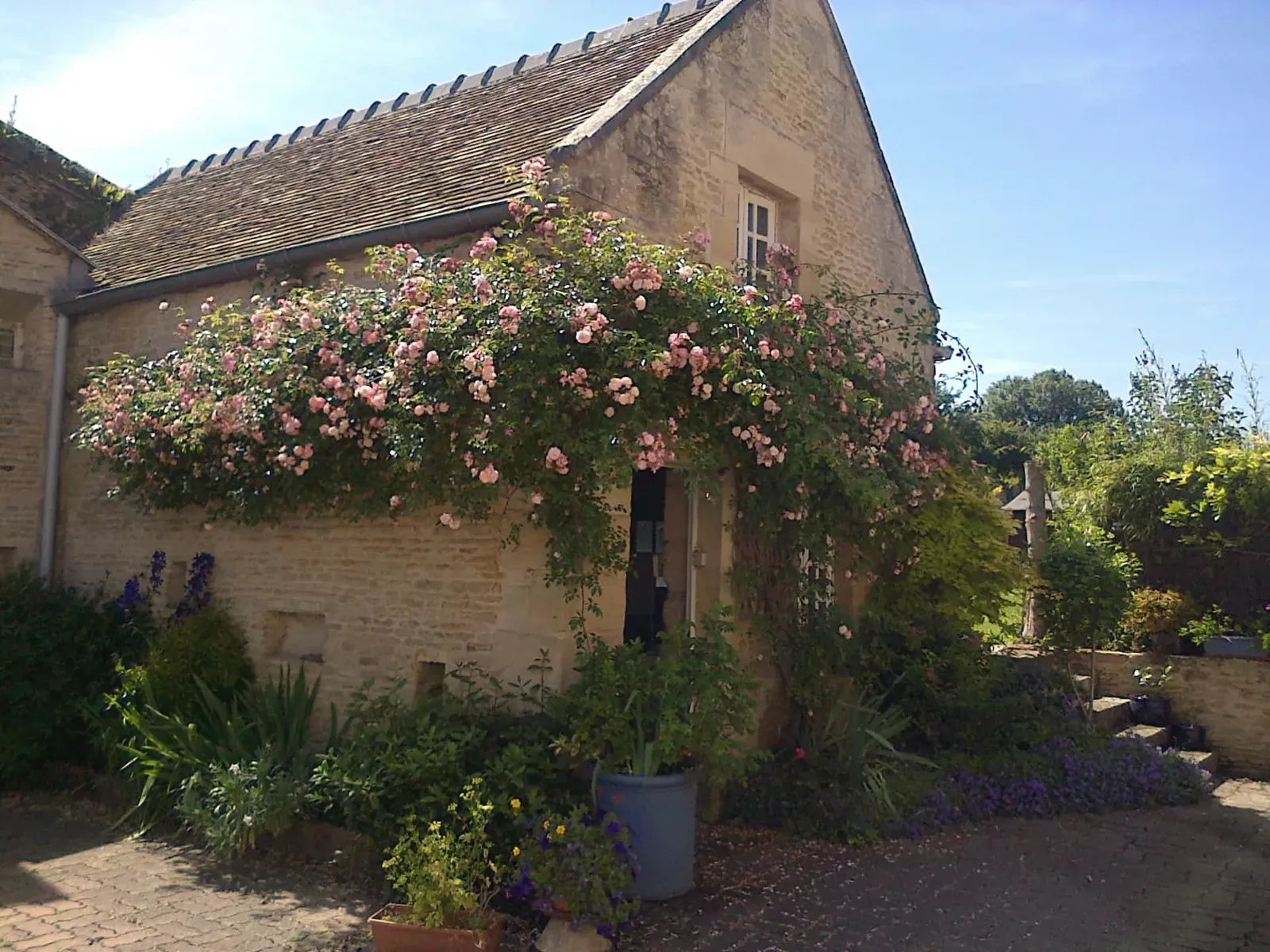
La maison bleue is a small stone cottage for four guests in Anisy, a quiet village on the Caen plain. Guests mention the location in their reviews:
"Perfect location to explore the beaches and different locations from D-Day." Martin, July 2026
"A lovely house, conveniently located for visiting the local attractions such as Bayeux, Caen, Arromanches, and many lovely seaside towns." Emma, June 2024
Check availability and nightly rates on the cottage calendar. Your booking request goes straight to Patricia, your host, who answers in English, French and Italian.
Planning your visit
Allow two days: the eastern beaches one day, the western sites the next. If you are coming around 6 June or in July and August, book your accommodation several months ahead and get to the busiest sites, such as Omaha Beach and Arromanches, early in the morning.
Key takeaway. The beaches remain free. All six sites fit into two days from north of Caen. Around 6 June and in summer, the sites get busy: book your stay early.
Frequently asked questions
When were the D-Day beaches added to the World Heritage List?
On 26 July 2026, at the 48th session of the UNESCO World Heritage Committee in Busan, South Korea. The decision is numbered 48 COM 8B.26. It was made under criterion (vi), which covers places associated with events of universal significance.
What is a serial World Heritage property?
It is a single World Heritage property made up of several separate sites that only make sense together. Here, six sites across two departments tell the story of one military operation. UNESCO therefore assesses them as one whole.
Do you have to pay to visit the D-Day beaches?
No. Pedestrian access to beaches is free in France, and the listing adds no entry fee. Only museums and some managed sites charge for entry, so check their official websites before you go.
How long do you need to see all six sites?
Two days from north of Caen. The first day covers Sword, Juno and Gold, all within 30 minutes. The second covers Utah, Pointe du Hoc and Omaha, with Utah 70 minutes away at most.
What is UNESCO asking France to do?
The decision asks France to manage visitor numbers, build a shared interpretation of the six sites and monitor fragile remains. It also requires the offshore wind farm to be dismantled at the end of its concession in 2057. France must also inform UNESCO of any major project that could affect the property.